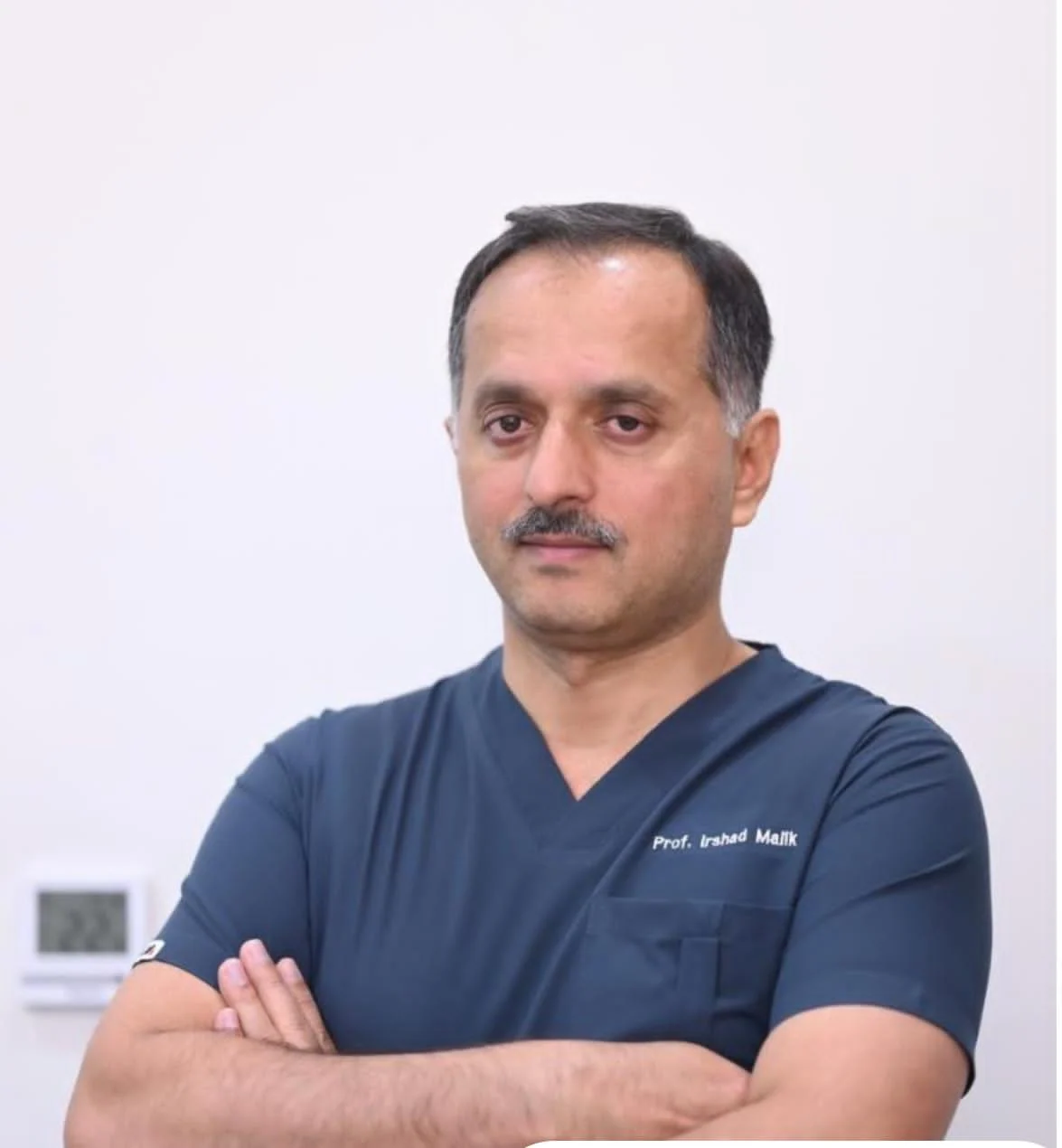
Local voice search — Lahore

Local Lahore answers before the full FAQ

Plain answers for “ENT near me”, clinic hours, and directions in Lahore — then tap to call.

Where is the nearest ENT clinic in Lahore?

Prof. Dr. Muhammad Irshad Malik sees patients at three Lahore locations: ENT 360 Care Clinic at 58-J Valencia Town, Lahore, Punjab, Pakistan (Monday to Saturday, 4 to 6 PM); Omer Hospital Johar Town (Monday to Friday, 7 to 8 PM); and Omer Hospital Jail Road (Monday to Friday, 8:30 to 10 PM). Call 0303-0354233 to book the closest slot.

Learn more

Is there an ENT doctor near Valencia Town Lahore?

Yes. Prof. Dr. Muhammad Irshad Malik practices at ENT 360 Care Clinic, 58-J Valencia Town, Lahore. Clinic hours are Monday to Saturday, 4 to 6 PM. Call or WhatsApp 0303-0354233 to book an ear, nose, or throat consultation at the Valencia Town clinic.

Learn more

How do I get directions to ENT 360 Care Clinic?

ENT 360 Care Clinic is at 58-J Valencia Town, Lahore, Punjab, Pakistan. Open Google Maps for place ID directions, or call 0303-0354233 for help finding the clinic entrance, parking, and the nearest landmark in Valencia Town, Lahore, before your appointment.

Get directions

What are ENT clinic timings in Lahore tonight?

Valencia Town: Monday to Saturday, 4 to 6 PM. Johar Town: Monday to Friday, 7 to 8 PM. Jail Road: Monday to Friday, 8:30 to 10 PM. Confirm today’s availability on 0303-0354233 before travelling, as evening slots can fill quickly.

Learn more

ENT Questions Answered by Prof. Dr. Muhammad Irshad Malik — FCPS ENT Surgeon, Lahore

This page answers the most common questions patients in Lahore ask about ear and hearing problems, nose and sinus conditions, throat and voice issues, and head and neck surgery, written and medically reviewed by Prof. Dr. Muhammad Irshad Malik (MBBS, MCPS, FCPS), Professor and Head of Department, ENT Surgery at AIMC and Jinnah Hospital, Lahore. Each answer is a direct clinical response, not a marketing summary.

Section A — About ENT Specialists

Patients arriving at an ENT clinic for the first time often have basic questions about who ENT specialists are, what they treat, and when they should be seen. These answers are written for someone who has never visited an ENT before.

What do ENT specialists deal with? +

An ENT specialist diagnoses and treats conditions of the ear, nose, throat, and head and neck. This includes hearing loss, ear infections, sinusitis, nasal polyps, tonsillitis, hoarseness, thyroid surgery, neck lumps, and head and neck tumours. ENT specialists treat both adults and children, using both medical and surgical methods.

Full ENT services at our Lahore clinics →
What is another name for an ENT specialist? +

An ENT specialist is also called an otolaryngologist or, in full, an otorhinolaryngologist. In Urdu, patients commonly say nak kan gala ka doctor. All three terms refer to the same specialist: a doctor trained in ear, nose, throat, and head and neck medicine and surgery.

What are the diseases treated by ENT? +

Ear: hearing loss, ear infections, tinnitus, vertigo, cholesteatoma, eardrum perforation.

Nose: sinusitis, deviated nasal septum, nasal polyps, allergic rhinitis, nosebleeds.

Throat: tonsillitis, hoarseness, sleep apnea, swallowing problems.

Head and neck: thyroid disorders, neck lumps, salivary gland problems, head and neck cancer.

Full conditions list →
What qualifications should an ENT specialist have? +

In Pakistan, the right qualification to look for is FCPS (ENT Surgery) from the College of Physicians and Surgeons Pakistan (CPSP). The FCPS requires a minimum of four years of supervised postgraduate training and a two-part exit examination. It is the highest surgical qualification in Pakistan. An MBBS alone qualifies a doctor for general practice, not specialist surgery.

Prof. Dr. Irshad Malik's qualifications →
What is the difference between an ENT specialist and an ENT surgeon? +

In practice, both terms refer to the same doctor. An ENT specialist is trained to manage ENT conditions with both medicine and surgery. The word "surgeon" is used to emphasise that the doctor performs operations. Prof. Dr. Irshad Malik is both — he sees patients in the clinic and performs ENT surgery, including cochlear implants, mastoidectomy, septoplasty, and head and neck procedures.

When should I visit an ENT specialist instead of a general doctor? +

See an ENT specialist if a problem has lasted more than three weeks, has returned more than three times in one year, or has not improved after a full course of treatment from a GP. Go directly to an ENT for sudden hearing loss, a neck lump that has not gone away in two weeks, hoarseness lasting more than three weeks, or a child with speech delay.

Red flags and urgent symptoms →
How can I identify the best ENT doctor or ENT specialist near me? +

Look for an FCPS in ENT Surgery, a current hospital affiliation at a recognised institution, and verified patient reviews. Prof. Dr. Muhammad Irshad Malik (FCPS) sees patients at ENT 360 Care Clinic in Valencia Town, and at Omer Hospital in Johar Town and on Jail Road, Lahore. To book: WhatsApp or call 03030354233.

Book an appointment →

Section B — Ear Questions

Ear problems are among the most common reasons patients visit an ENT clinic. These answers cover infections, surgery, recovery, and when to be concerned about a worsening ear condition. For procedure detail, see the ear specialist in Lahore guide and the cochlear implant programme.

What are the first signs of inner ear problems? +

The earliest signs of inner ear problems are dizziness or a spinning sensation (vertigo), a ringing or buzzing sound in the ear (tinnitus), and a feeling that the ear is blocked or muffled. Some patients notice sudden or gradual hearing loss in one ear. These symptoms need an ENT assessment; they do not resolve with antibiotic drops.

Vertigo and inner ear care in Lahore →
Does inner ear infection affect hearing? +

Yes. An inner ear infection (labyrinthitis) causes temporary hearing loss alongside dizziness and tinnitus. In most cases, hearing returns when the infection resolves. However, sudden sensorineural hearing loss, a sharp drop in hearing with no warning, is a medical emergency that needs an ENT assessment within 24 to 48 hours to prevent permanent hearing damage.

Hearing loss assessment by an ear specialist →
What are the signs of a serious ear infection? +

A serious ear infection shows as high fever, severe ear pain that does not settle with painkillers, discharge from the ear that is thick or bloody, swelling behind the ear, or sudden hearing loss. In children, unusual drowsiness, vomiting, or neck stiffness alongside ear pain is an emergency. These symptoms need same-day medical attention.

Can an ear infection lead to brain infection? +

In rare cases, an untreated middle ear infection can spread to the mastoid bone behind the ear (mastoiditis) and, from there, to the covering of the brain (meningitis) or the brain itself (cerebral abscess). This is uncommon when infections are treated early. Persistent ear discharge, ear pain, and facial swelling need prompt ENT review to prevent this progression.

Mastoidectomy and ear microsurgery in Lahore →
What is stage 3 ear infection? +

Ear infections are not formally staged in ENT clinical practice the way cancers are. However, in general patient language, "stage 3" refers to a middle ear infection that has spread beyond the eardrum to the mastoid bone. This is technically called acute mastoiditis and requires IV antibiotics in hospital and sometimes surgical drainage.

What is an end-stage ear infection? +

An end-stage ear infection usually refers to a chronically infected ear that has caused permanent damage — typically a perforated eardrum, destruction of the small hearing bones, or development of a cholesteatoma (a skin cyst inside the ear). At this point, surgery such as tympanoplasty or mastoidectomy is usually the only way to clear the infection and restore hearing.

Tympanoplasty and eardrum repair in Lahore →
How long before an ear infection becomes serious? +

A middle ear infection (otitis media) that does not improve within 72 hours of antibiotic treatment, or that is associated with fever above 39°C, warrants a review. An infection that causes swelling behind the ear or facial weakness at any point is an emergency. Do not wait longer than a week if symptoms are getting worse rather than better.

How to cure an ear infection at home? +

Mild outer ear infections (otitis externa) can be managed with over-the-counter antibiotic ear drops and keeping the ear dry. A warm compress reduces pain. However, middle ear infections in children and adults with discharge, fever, or hearing loss need a doctor's prescription. Do not put olive oil or home remedies into an ear with a perforated eardrum.

What happens if an ear infection gets too bad? +

An untreated or inadequately treated ear infection can cause eardrum perforation, permanent hearing loss, mastoiditis (bone infection behind the ear), facial nerve weakness, and, in severe cases, spread to the brain. Most of these complications are preventable with timely treatment. If antibiotics from a GP are not working after three to five days, see an ENT specialist.

Which ear infection requires surgery? +

Ear infections that require surgery include: acute mastoiditis that does not respond to IV antibiotics, cholesteatoma (skin cyst that destroys ear structures), chronic middle ear disease with a perforated eardrum, and recurrent infections in children where grommet insertion helps drain the middle ear. The specific operation depends on which structure is affected.

Mastoidectomy and ear microsurgery in Lahore →
What's the worst ear infection to get? +

Cholesteatoma is considered one of the most serious ear conditions. It is an abnormal growth of skin inside the middle ear that expands slowly, destroying the hearing bones, eardrum, and potentially the facial nerve and surrounding bone. It does not resolve with antibiotics and always requires surgery. Left untreated, it can spread to the skull base.

Cholesteatoma and serious ear disease →
What age is best for ear tube surgery? +

Grommet insertion (ear tube surgery) is most commonly performed in children between 1 and 3 years of age, when recurrent ear infections or glue ear is affecting hearing and speech development. There is no strict lower age limit; the surgery is safe in infants. The decision depends on the frequency of infections and whether hearing loss is affecting development.

Grommets and childhood ear infections →
Which surgery is best for the ears? +

There is no single "best" ear surgery — the right procedure depends on the specific problem. Grommet insertion treats recurrent otitis media. Tympanoplasty repairs a perforated eardrum. Mastoidectomy removes infected mastoid bone. Ossiculoplasty reconstructs the hearing bones. Cochlear implant surgery is used for profound hearing loss. An ENT assessment identifies which operation is appropriate.

Is ear surgery permanent? +

Most ear surgeries produce long-lasting results. A tympanoplasty closes the eardrum permanently in over 80% of cases. A mastoidectomy removes the disease and prevents recurrence when successful. A cochlear implant is a permanent device — the internal component stays in place for life. Grommets are temporary and fall out naturally within 6 to 12 months as designed.

Is ear operation safe? +

Ear surgery performed by a trained FCPS ENT surgeon in a properly equipped operating theatre is safe for the vast majority of patients. The main risks specific to ear surgery are temporary or permanent hearing change, and a small risk of damage to the facial nerve — a structure that passes through the temporal bone. Your surgeon explains all risks before you consent.

How long is recovery from ear surgery? +

Recovery time depends on the procedure.

Grommet insertion: day case, back to normal in 24 to 48 hours.

Tympanoplasty: 2 to 3 weeks before returning to work, avoid water in the ear for 6 to 8 weeks.

Mastoidectomy: 3 to 4 weeks, no flying for 6 weeks.

Cochlear implant: surgical recovery 2 to 3 weeks, device activation starts 4 weeks after surgery.

How painful is ear surgery? +

Most ear surgeries are performed under general anaesthesia, so there is no pain during the procedure. Post-operative discomfort is typically mild to moderate and managed with standard painkillers for 3 to 5 days. Patients describe the feeling as a blocked or pressured ear rather than sharp pain. Severe post-operative pain or sudden facial weakness should be reported to the surgeon immediately.

How to sleep after ear surgery? +

Sleep with your head elevated at 30 to 45 degrees for the first week to reduce swelling. Lie on the opposite side to the operated ear. Avoid sleeping flat as this increases pressure and fluid accumulation. Use a travel pillow to prevent accidentally rolling onto the operated side. Your surgeon provides specific written instructions based on the procedure performed.

Can a dirty pillow cause ear infection? +

A dirty pillowcase can harbour bacteria and increase the risk of outer ear infection (otitis externa), particularly if you have pierced ears or a small cut near the ear canal. Middle ear infections (otitis media), which affect the space behind the eardrum, develop from bacteria travelling up the Eustachian tube from the throat — not from external contact with the ear.

Section C — Nose Questions

Nose and sinus problems are the second most common reason patients visit an ENT. These questions cover non-surgical options, costs in Pakistan, and the most common surgical procedures for nasal problems. Full guides live on the nose specialist Lahore page and the rhinoplasty in Lahore guide.

How to reduce the size of the nose without cosmetic surgery? +

Non-surgical options include dermal filler injections (liquid rhinoplasty), which use hyaluronic acid to camouflage a nasal hump or refine the nasal tip. Results last 12 to 18 months and cost around PKR 45,000 to 80,000 in Lahore. Contouring with makeup is a temporary visual option. For permanent structural change — including correction of breathing problems — surgical rhinoplasty or septoplasty is needed.

Rhinoplasty Lahore →
How much does rhinoplasty cost in Lahore, Pakistan? +

Rhinoplasty in Lahore costs between PKR 130,000 and PKR 550,000 depending on the surgeon's experience, the type of procedure (cosmetic, functional, or combined), and the hospital. FCPS ENT surgeons typically charge within the PKR 150,000 to 300,000 range for functional rhinoplasty. Cosmetic rhinoplasty at specialist centres starts from PKR 200,000. Revision rhinoplasty is priced higher due to added complexity. Source: Oladoc 2026 surgical listings.

Rhinoplasty Lahore — full guide →
What is a deviated nasal septum? +

The nasal septum is the wall of cartilage and bone that divides the two nostrils. When it sits off-centre — tilted to one side — it is called a deviated nasal septum (DNS). A moderate DNS causes one-sided nasal blockage, snoring, mouth breathing, and recurrent sinus infections. Mild cases are managed with nasal sprays. Severe cases that block airflow are corrected with a septoplasty.

Deviated nasal septum treatment in Lahore →
What is septoplasty and when is it needed? +

Septoplasty is a surgical procedure that straightens the nasal septum to improve airflow through the nose. It is performed under general anaesthesia and takes 45 to 90 minutes. It is needed when a deviated septum causes significant nasal blockage that has not responded to at least 3 months of medical treatment. Surgery cost in Pakistan: PKR 50,000 to 90,000 all-in. Recovery: 2 to 3 weeks. Source: Marham.pk 2026.

Septoplasty for blocked nose in Lahore →
What is FESS (Endoscopic Sinus Surgery)? +

FESS stands for Functional Endoscopic Sinus Surgery. It is a minimally invasive operation performed through the nostrils, with no cuts on the face. The surgeon uses a thin camera (endoscope) and small instruments to clear blocked sinus openings, remove polyps, and restore normal sinus drainage. It is the treatment for chronic sinusitis and nasal polyps that do not respond to medication. Recovery takes 2 to 4 weeks.

FESS sinus surgery in Lahore →
What are nasal polyps? +

Nasal polyps are soft, grape-like swellings inside the nose and sinuses. They develop from long-term inflammation, usually caused by chronic sinusitis or allergic rhinitis. They cause a blocked nose, loss of smell, and a feeling of pressure in the face. Small polyps respond to steroid nasal sprays (PKR 2,000 to 4,000 per month). Larger polyps that block breathing are removed with FESS.

Nasal polyps treatment in Lahore →

Section D — Throat Questions

Throat and voice problems range from routine tonsil infections to conditions requiring urgent assessment. These questions cover the most common concerns patients bring to an ENT clinic. See also the throat specialist in Lahore page and neck lump assessment when a mass is involved.

What are common signs I need to visit an ENT specialist? +

Ear: hearing loss, discharge, pain lasting more than a week, ringing sounds, dizziness.

Nose: blocked nose for more than 3 weeks, nosebleeds, loss of smell.

Throat: sore throat more than 3 times a year, hoarse voice over 3 weeks, difficulty swallowing, snoring with breathing pauses.

General: any neck lump present for more than 2 weeks. See your GP first for short, mild symptoms.

What are the red flags for ENT? +

See an ENT surgeon the same week for:

(1) Sudden loss of hearing in one ear.

(2) A neck lump present for more than 2 weeks.

(3) A hoarse voice that has not improved in 3 weeks.

(4) Difficulty swallowing that is getting worse.

(5) A nosebleed not stopping after 20 minutes of firm pressure.

(6) Ear pain with discharge and fever in a child.

These symptoms need urgent specialist review, not watchful waiting.

Book urgent appointment →
Can an ENT check your throat? +

Yes. Examining the throat is a routine part of every ENT consultation. This includes direct inspection of the tonsils, tongue base, and back of the throat. For the voice box and vocal cords, the ENT uses a flexible laryngoscope, a thin camera passed through the nose and into the throat. It takes less than a minute and is uncomfortable rather than painful.

What is a common ENT problem? +

The most common ENT problems in Pakistan are recurrent tonsillitis, sinusitis, ear wax blockage, allergic rhinitis, and deviated nasal septum. In children, recurrent ear infections, enlarged adenoids, and glue ear are the most frequent presentations. Most patients see a general physician first and come to an ENT when these problems return repeatedly or do not clear with standard treatment.

Is ENT surgery risky? +

Most ENT surgeries are low-risk day-case procedures when performed by a trained FCPS surgeon. Tonsillectomy, septoplasty, FESS, and grommet insertion carry well-understood, low complication rates. More complex procedures — cochlear implant surgery, neck dissection, thyroidectomy — carry higher risks, including nerve involvement. These risks are explained in full before any surgery. Prof. Dr. Irshad Malik outlines risks and alternatives at the consultation.

Why does my throat keep getting infected? +

Recurring throat infections are most commonly caused by chronically infected tonsils that harbour bacteria between episodes. Other causes include post-nasal drip from sinusitis or allergic rhinitis dripping onto the throat, acid reflux irritating the throat from below, or a weakened immune system. If you have had more than 4 to 5 infections in a year for two consecutive years, a tonsillectomy assessment is appropriate.

Tonsillitis treatment Lahore →

Section E — Costs and Practical Questions

These are the questions patients most commonly ask before booking. Costs in Pakistan vary by surgeon, hospital, and procedure complexity. The figures below reflect 2026 market data from verified Pakistani medical platforms.

What are the consultation fees for ENT doctors in Lahore? +

ENT consultation fees in Lahore range from PKR 1,500 to PKR 5,000 depending on the doctor's seniority and the clinic. A Professor-level FCPS ENT surgeon at a private clinic typically charges PKR 2,500 to 5,000 per consultation. Government hospital OPD fees are significantly lower. For Prof. Dr. Irshad Malik's current fee, call or WhatsApp 03030354233.

Book appointment →
What is the cost of ear surgery in Pakistan? +

Ear surgery costs in Pakistan depend on the procedure:

Grommet insertion: PKR 30,000 to 60,000 all-in.

Tympanoplasty: PKR 60,000 to 120,000.

Mastoidectomy: PKR 80,000 to 180,000.

Cochlear implant surgery: PKR 1,500,000 to 3,500,000, including device cost.

These are total package estimates including surgeon fee, anaesthesia, hospital stay, and device where applicable. Exact quotes must come from the surgeon after assessment. Government hospital rates are lower.

Ear surgery procedures in Lahore →
What is the cost of septoplasty in Pakistan? +

Septoplasty in Pakistan costs between PKR 50,000 and PKR 90,000 as a total surgical package, covering surgeon fee, anaesthesia, and the one-night hospital stay most patients require. Consultation fees range from PKR 1,200 to 5,000. Recovery takes 2 to 3 weeks. The total out-of-pocket cost is substantially lower in government hospitals. Source: Marham.pk surgical listings 2026.

Septoplasty cost and recovery guide →
What is the cost of nasal polyp removal in Pakistan? +

Medical management (steroid nasal sprays) costs PKR 2,000 to 4,000 per month and is the first-line treatment for small polyps. Surgical removal by FESS costs PKR 60,000 to 150,000 all-in, depending on the extent of polyp disease and which hospital the procedure is performed at. Recurrence is possible without ongoing medical treatment after surgery. Source: Market data 2026.

Nasal polyp removal in Lahore →
How to book an appointment with Prof. Dr. Irshad Malik? +

WhatsApp or call 03030354233. Prof. Dr. Irshad Malik sees patients at ENT 360 Care Clinic in Valencia Town (Monday to Saturday, 4 to 6 PM), Omer Hospital Johar Town (Monday to Friday, 6:30 to 7:30 PM), and Omer Hospital Jail Road (Monday to Friday, 8 to 10 PM). No referral letter is needed. Same-day and next-day appointments are often available.

Full clinic details and contact →
Does Prof. Dr. Irshad Malik offer affordable treatment? +

Prof. Dr. Irshad Malik consults at both private clinics and at Jinnah Hospital, a government teaching hospital where treatment costs are significantly lower. Patients who cannot afford private rates can access his surgical team at Jinnah Hospital through the government outpatient system. For private clinic fees, contact the clinic directly to ask about current rates.

Clinic locations and timings →
What hospitals does Prof. Dr. Irshad Malik work at? +

Prof. Dr. Irshad Malik works at Jinnah Hospital Lahore (affiliated with AIMC) as Professor and HOD of ENT Surgery, his primary government hospital. His private clinics are ENT 360 Care Clinic in Valencia Town, Omer Hospital in Johar Town, and Omer Hospital on Jail Road, Lahore. Surgical procedures are performed at Omer Hospital.

About Prof. Dr. Irshad Malik →
What are the clinic timings? +

ENT 360 Care Clinic, Valencia Town: Monday to Saturday, 4:00 PM to 6:00 PM.

Omer Hospital, Johar Town: Monday to Friday, 6:30 PM to 7:30 PM.

Omer Hospital, Jail Road: Monday to Friday, 8:00 PM to 10:00 PM.

To confirm same-day availability, WhatsApp 03030354233 before travelling.

Full contact page with maps and directions →

Section F — Paediatric ENT Questions

Parents bring their children to ENT specialists for a different set of concerns than adults. These questions cover the most common reasons children are seen in an ENT clinic and what to expect.

Best ENT specialist in Lahore for babies? +

For infants and very young children with ear, nose, or throat problems, an ENT specialist with active paediatric experience is the right choice. Prof. Dr. Muhammad Irshad Malik treats ENT conditions in patients of all ages, including infants, with particular experience in paediatric cochlear implant assessment, grommet insertion for recurrent ear infections, and adenoid assessment in young children. To book: WhatsApp 03030354233.

Infant and baby ENT assessment in Lahore →
Best paediatric ENT specialist in Lahore? +

Prof. Dr. Muhammad Irshad Malik (MBBS, MCPS, FCPS) is an ENT surgeon in Lahore with over 20 years of experience treating children and adults. He is Professor and HOD of ENT Surgery at AIMC and Jinnah Hospital, and has a particular focus on paediatric cochlear implantation, recurrent ear infections, and adenotonsillar disease in children. Clinics in Valencia Town, Johar Town, and Jail Road. Book: 03030354233

Children’s ENT care with Dr Irshad Malik →
At what age should a child first see an ENT? +

A child should see an ENT if they have had three or more ear infections before age 2, if there is any concern about hearing, if speech is delayed compared to peers, if the child is a consistent mouth breather, or if tonsil infections are recurring frequently. Newborn hearing screening is standard practice; if a baby fails the screen, an ENT and audiologist referral should follow promptly.

When to bring a child to an ear specialist →
What are common ENT problems in children? +

Most common: recurrent middle ear infections (otitis media), glue ear (fluid behind the eardrum causing hearing loss), enlarged tonsils causing recurrent throat infections, enlarged adenoids causing blocked nose and mouth breathing.

Less common but important: paediatric hearing loss from birth, foreign body in the ear or nose, speech delay linked to hearing loss, and tongue-tie.

Most paediatric ENT problems resolve without surgery when caught early.

Full paediatric hearing and ear guide →