More likely to develop
For Lahore residents, the city's air makes it more likely for nasal problems to develop in the first place.
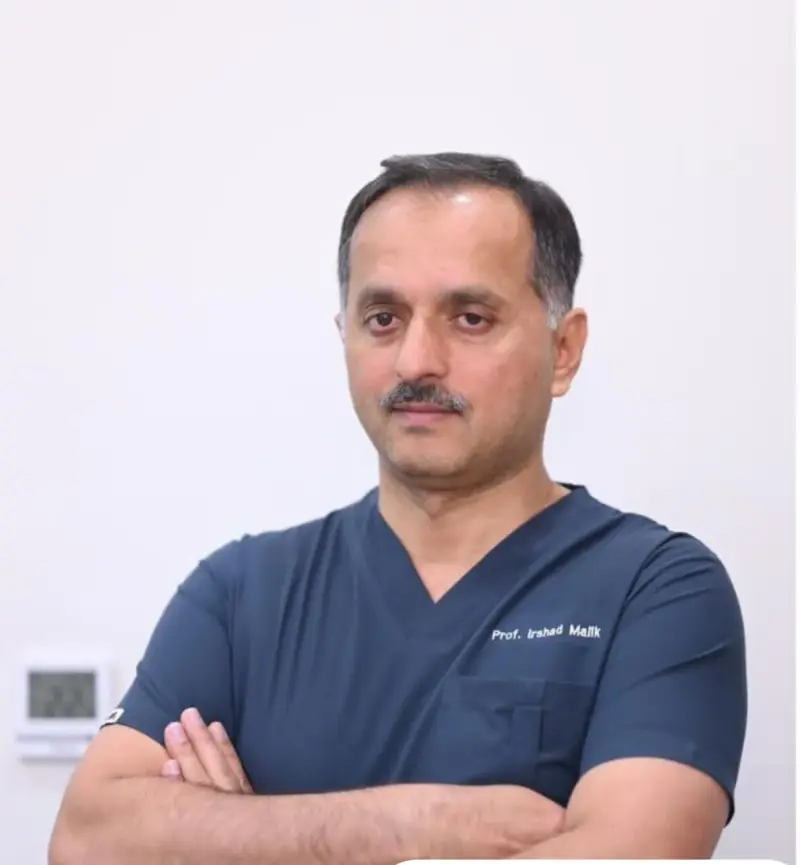
Prof. Dr. Muhammad Irshad Malik
Prof. Dr. Muhammad Irshad Malik (MBBS, MCPS, FCPS) is an FCPS-qualified nose specialist doctor in Lahore with over 20 years of surgical experience at AIMC and Jinnah Hospital — see his academic profile and credentials. He treats deviated nasal septum, sinusitis, nasal polyps, and allergic rhinitis, and performs septoplasty, FESS, turbinoplasty, and rhinoplasty in Lahore at ENT 360 Care Clinic, Valencia Town. Related care for ear and hearing problems and throat conditions is available within the same ENT practice.
Air quality and urban allergy patterns help explain why blocked noses, sinusitis, and allergic rhinitis are such common reasons for ENT specialist visits in Lahore — and why many patients also need assessment for related paediatric ear and adenoid issues.
102.1
µg/m³ PM2.5Lahore ranked second among the world's most polluted major cities by annual PM2.5 levels in 2024, recording 102.1 micrograms per cubic metre on average, according to IQAir's World Air Quality Report. Research published in the International Forum of Allergy & Rhinology has shown that sustained exposure to PM2.5 at these levels is an independent risk factor for chronic rhinosinusitis and is associated with increased nasal inflammation in people who already have existing nasal conditions.
For Lahore residents, the city's air makes it more likely for nasal problems to develop in the first place.
Nasal conditions that might settle in a cleaner environment often persist here because the irritant trigger never fully goes away. This is the background against which a nose specialist in Lahore sees patients every day.
A 2024 case-control study conducted at Shalamar Institute of Health Sciences in Lahore found that chronic rhinosinusitis was significantly associated with allergic rhinitis in the city's urban population, with an odds ratio of 3.21.
Citation: Ijaz M, et al. The Epidemiology, Risk Factors, and Treatment Outcomes of Chronic Rhinosinusitis in Urban and Rural Populations of Lahore. Shalamar Institute of Health Sciences, Lahore, Pakistan. January–June 2024. View on ResearchGate
A separate 2024 cross-sectional study carried out in the ENT outpatient department at Services Hospital, Lahore, examined the relationship between allergic rhinitis, sleep disruption, and mental health in 351 patients.
Citation: Association between Allergic Rhinitis, Sleep Quality, and Depression in Patients Attending Public Health Care Facility in Lahore, Pakistan. Department of Otorhinolaryngology, Services Hospital, Lahore. July–October 2024. n=351. View on ResearchGate
Many patients in Lahore search for a nose doctor or ناک کا ڈاکٹر without knowing which type of specialist handles their specific problem. The terms overlap, and the difference is worth understanding before you book.
An ENT specialist, clinically called an otolaryngologist, evaluates and manages conditions of the ear, nose, throat, head, and neck. In Pakistan, the postgraduate qualification recognised for this specialty is the FCPS in ENT Surgery, awarded by the College of Physicians and Surgeons Pakistan.
A rhinologist is an ENT specialist whose clinical focus is specifically on the nose and sinuses. Not every ENT in Lahore has this focus. The distinction matters when the problem is nasal, because a rhinology-focused ENT will have greater exposure to nasal endoscopy, sinus surgery, and procedures like septoplasty and rhinoplasty.
Patients searching in Urdu may use the terms ناک کا ڈاکٹر or nak kan gala doctor. Both refer to the same specialist. What to look for is an FCPS-qualified ENT with documented experience in nasal conditions and procedures relevant to your specific problem.
ناک کا ڈاکٹر
Prof. Dr. Muhammad Irshad Malik is an FCPS-qualified ENT surgeon and nose specialist in Lahore, and Professor of Otolaryngology at Allama Iqbal Medical College (AIMC) and Jinnah Hospital — see his credentials and career timeline. His rhinology practice covers nasal obstruction, sinusitis, nasal polyps, allergic rhinitis, epistaxis, and structural problems such as a deviated septum. He is registered with the Pakistan Medical Commission (PMC).
His surgical practice includes septoplasty, functional endoscopic sinus surgery (FESS), turbinoplasty, nasal polypectomy, and cosmetic and functional rhinoplasty when clinically appropriate. Treatment decisions follow clinical assessment, nasal examination, and any indicated endoscopy or imaging.
As Professor and Head of ENT Surgery at AIMC and Jinnah Hospital, he leads a tertiary-level surgical department where complex nose and sinus cases are managed alongside postgraduate ENT teaching and training.
Nose specialist consultations and nasal endoscopy (where indicated) are available at ENT 360 Care Clinic in Valencia Town. Consultations are also held at Omer Hospital in Johar Town and on Jail Road, Lahore.
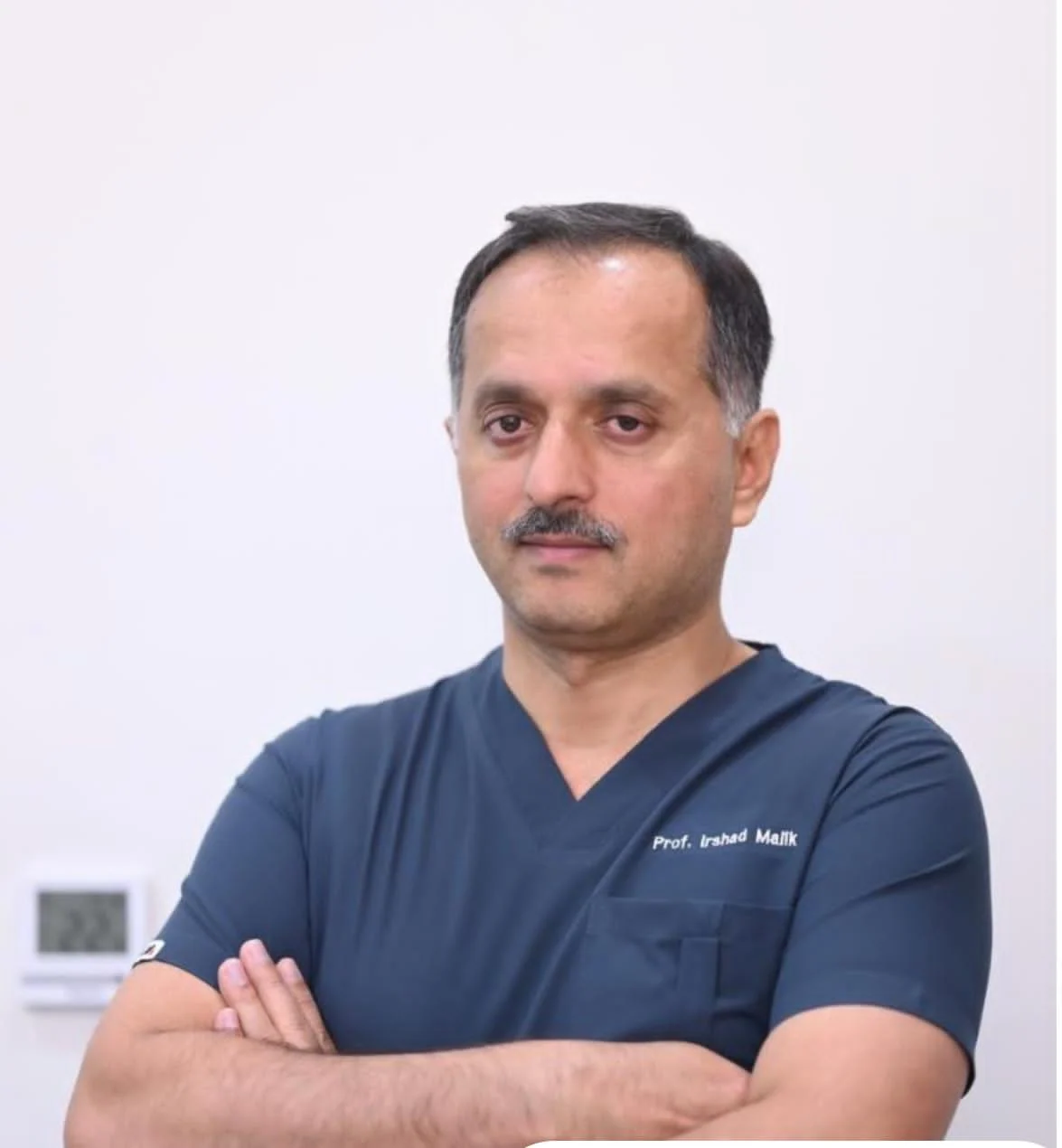
Postgraduate specialist qualification in ENT Surgery awarded by the College of Physicians and Surgeons Pakistan (CPSP)
Surgical practice spanning septoplasty, FESS, turbinoplasty, nasal polypectomy, and rhinoplasty
Assessment and surgical management of nasal obstruction, sinusitis, polyps, and related nasal disease
Unit I, Allama Iqbal Medical College and Jinnah Hospital, Lahore
Clinical nasal examination and nasal endoscopy when indicated at the Valencia Town clinic
Registered medical practitioner with the Pakistan Medical Commission
Prof. Dr. Irshad Malik holds an FCPS in ENT Surgery awarded by the College of Physicians and Surgeons Pakistan, the postgraduate body that sets specialist training standards in the country. This qualification requires completing a structured surgical training programme and passing a nationally supervised examination in ENT surgery.
He serves as Professor and Head of the ENT Surgery Department at Allama Iqbal Medical College and Jinnah Hospital, Lahore. He is a CPSP-approved supervisor, which means postgraduate ENT trainees complete part of their FCPS preparation under his supervision. He is also a national FCPS and MCPS examiner in ENT.
Prof. Dr. Irshad Malik is an active member of the Pakistan Society of Otolaryngology Head and Neck Surgery and has participated in rhinology conferences at the national level. He served as Chairman of the PSORL Congress in 2024.
His surgical work at Jinnah Hospital includes nasal procedures as a regular part of his operating practice, not as occasional cases. Patients seen in his clinic for nasal conditions are assessed and, where surgery is needed, operated on by the same surgeon.
The following assessments are used to evaluate nasal obstruction, sinus disease, and related rhinology problems. Tests are arranged based on symptoms and clinical findings. Results are reviewed as part of treatment planning at the consultation.
What it is: Direct inspection of the nasal passages, septum, and turbinates as part of a focused ENT examination.
What it assesses: External and internal nasal structure, mucosal appearance, and obvious sources of obstruction or bleeding.
When used: Routinely for patients with blocked nose, recurrent sinus symptoms, nosebleeds, or nasal deformity.
What it is: A thin rigid or flexible endoscope provides a clear view of the nasal cavity, sinus openings, and related structures.
What it assesses: Polyps, septal deviation, turbinate size, sinus drainage pathways, and other findings not fully visible on routine inspection.
When used: When symptoms persist, when surgery is being considered, or when a detailed internal view is clinically useful.
What it is: Cross-sectional imaging of the sinuses and nasal bony anatomy.
What it assesses: Extent of sinus disease, anatomical variation, and structural detail relevant to FESS or other nasal surgery planning.
When used: When clinical findings suggest chronic sinus disease, polyps, or a need for detailed surgical planning.
What it is: Structured review of allergy symptoms, seasonal patterns, medications tried, and previous ENT treatment.
What it assesses: Whether allergic rhinitis or chronic inflammation is contributing to congestion and when medical therapy should be optimized before surgery.
When used: For patients with sneezing, itchy nose, seasonal blockage, or recurrent congestion without a clear structural cause alone.
The nasal septum is the wall of cartilage and bone dividing the nose into two passages. When it leans significantly to one side, one passage narrows and can contribute to chronic nasal blockage.
This is a structural issue that medication does not correct anatomically, though it may reduce associated swelling. A clinical examination by a nose specialist establishes whether the deviation is the primary cause of symptoms.
Deviated Nasal Septum Treatment in Lahore →Nasal obstruction has two broad categories of causes: structural, such as a deviated septum or enlarged turbinates, and inflammatory, such as allergic rhinitis or sinusitis.
In Lahore, both often coexist in the same patient due to the city's air quality. A correct diagnosis at the first ENT visit determines whether management should be medical, procedural, or a combination of both.
Nasal Obstruction Treatment in Lahore →The sinuses are air-filled cavities connected to the nasal passages through small drainage openings. When those openings become inflamed and cannot drain properly, rhinosinusitis develops. Acute episodes are managed medically.
When nasal and facial symptoms persist beyond 12 weeks despite appropriate treatment, an ENT assessment with imaging is the next step.
Sinusitis Treatment in Lahore →Nasal polyps are non-cancerous growths associated with long-standing nasal inflammation. A gradually reducing sense of smell is a common early sign. Treatment depends on the size, location, and severity of symptoms. Some patients respond to intranasal steroid therapy. Others need a surgical assessment when polyps significantly affect the nasal airway.
Nasal Polyps Treatment in Lahore →Allergic rhinitis causes sneezing, nasal congestion, and post-nasal drip in response to triggers such as dust, pollen, and mould.
In Lahore, environmental irritants including vehicle emissions can aggravate existing nasal allergy, making symptoms harder to control. Treatment includes identifying relevant allergens and selecting the right nasal medication based on symptom pattern.
Book allergy and rhinitis consultation →Most nosebleeds originate from small blood vessels at the front of the nasal septum and respond to steady direct pressure.
Nosebleeds that recur frequently, do not stop with first aid, or occur without a clear trigger need ENT assessment. Heavy or persistent nasal bleeding may require urgent care rather than a routine appointment.
Nosebleed Treatment in Lahore →Persistent nasal discharge that has not improved after a reasonable period of treatment needs a proper diagnosis. The cause may be allergic rhinitis, chronic sinusitis, or, in uncommon cases, a cerebrospinal fluid leak, which produces clear, watery discharge from one nostril and warrants prompt ENT review.
Book a Consultation →Young children sometimes insert small objects into their nostrils. One-sided nasal discharge with an unpleasant smell in a child is a sign that warrants ENT assessment.
Attempting removal at home carries a risk of pushing the object deeper. At ENT 360 Care Clinic, removal is carried out using appropriate instruments under direct clinical vision.
Paediatric ENT Lahore →The inferior turbinates warm, humidify, and filter air entering the nose. When they stay enlarged beyond normal variation, they can contribute to persistent nasal obstruction on one or both sides. This condition overlaps in symptoms with a deviated septum.
Nasal endoscopy in the clinic helps distinguish between the two and guides the appropriate management.
Turbinoplasty in Lahore →Persistent or unexplained loss of smell warrants a nasal assessment. Causes seen in ENT practice include nasal polyps, chronic sinusitis, and post-viral olfactory dysfunction, including cases following COVID-19.
Because each cause has a different treatment pathway, smell loss that does not resolve on its own should not be left without evaluation.
Book a Consultation →Naak Band Hone Ka Ilaj
Sinus Infection — Tests Explained
Sinus Infection: Causes, Symptoms & Treatment
What Causes Sinus Infection?
Causes Of Runny Nose
Prof. Dr. Irshad Malik performs the nasal procedures listed below through his practice at Jinnah Hospital and at private operation theatres in Lahore. The surgeon who sees you in the clinic is the same surgeon who operates.
Septoplasty corrects a deviated nasal septum that is causing significant breathing difficulty. The incision is made inside the nostril with no external cuts and no change to the outer appearance of the nose. Whether septoplasty is appropriate depends on symptoms, clinical examination, and response to prior treatment.
Book a septoplasty consultation →FESS opens blocked sinus drainage pathways using a small camera passed through the nostril. It is used in selected cases of chronic sinusitis and nasal polyp disease where medical treatment has not produced adequate improvement. No incision is made on the face.
Book a FESS consultation →Rhinoplasty reshapes the nose for functional reasons, cosmetic reasons, or both. Functional rhinoplasty addresses breathing problems caused by nasal anatomy.
Cosmetic rhinoplasty changes the shape or proportion of the nose. Prof. Dr. Irshad Malik approaches rhinoplasty as an ENT surgeon, which means nasal airway function is assessed as part of every surgical plan.
Rhinoplasty in Lahore →Turbinoplasty reduces the volume of permanently enlarged inferior turbinates while preserving their surface and function. It is often performed alongside septoplasty when both conditions are present in the same patient.
Book a turbinoplasty consultation →Nasal polyp removal is performed endoscopically through the nostrils. When polyps are associated with chronic sinus disease, polypectomy is carried out as part of FESS in the same procedure.
Book a polyp removal consultation →Nasal cauterisation is an outpatient procedure used to treat recurrent nosebleeds originating from identifiable blood vessels at the front of the nasal septum. It is performed under local anaesthesia and does not require a hospital admission.
Book a Consultation →What Does Rhinoplasty Include? — Prof. Dr. Muhammad Irshad Malik
Many people tolerate persistent nasal symptoms for months before seeking assessment. Some symptoms do resolve on their own or respond to initial treatment. Others are signs that a nose specialist should be involved.
Children commonly present with nasal blockage, allergy-related congestion, recurrent colds, nosebleeds, and mouth breathing. Prof. Dr. Muhammad Irshad Malik assesses paediatric nasal and sinus concerns with age-appropriate examination and clear guidance for parents.
Parents should consider specialist assessment if their child has persistent mouth breathing, recurrent nosebleeds, long-standing blockage not improving with medication, or concern about nasal polyps or structural obstruction.
Prof. Dr. Muhammad Irshad Malik holds nose specialist consultations at three clinics across Lahore, making specialist rhinology care accessible across Valencia Town, DHA, Gulberg, Model Town, Johar Town, Bahria Town Lahore, Cantt, and surrounding areas.
Educational videos covering rhinoplasty and related nose and sinus topics. Additional dedicated videos will be added as they are published on the clinic channel.
Prof. Dr. Muhammad Irshad Malik explains rhinoplasty, how it works, and what to expect from nose reshaping for appearance or breathing.
A nose specialist is an ENT surgeon whose clinical practice focuses on the nose and sinuses. They diagnose and treat deviated nasal septum, chronic sinusitis, nasal polyps, allergic rhinitis, nasal obstruction, and nosebleeds, and perform procedures including septoplasty, FESS, turbinoplasty, and rhinoplasty.
Medication does not correct the structural position of a deviated septum, but it can reduce inflammation and improve symptoms in some patients. Septoplasty is considered when symptoms remain significant despite appropriate medical treatment and the septum is confirmed as the primary cause.
Persistent one-sided nasal blockage can result from a deviated septum, unilateral nasal polyp, or turbinate enlargement on one side. One-sided obstruction that does not resolve should be assessed by a nose specialist to identify the cause.
Rhinoplasty falls within the scope of both ENT surgeons and plastic surgeons. For patients whose concerns involve breathing function alongside cosmetic change, an ENT surgeon with experience in nasal airway surgery may be particularly relevant. The right choice depends on the specific goals of the procedure.
The decision depends on the cause. A structural problem such as a deviated septum does not respond to medication alone, while an inflammatory cause such as allergic rhinitis may improve with the right medical treatment. Clinical examination and sometimes nasal endoscopy or imaging is needed to identify what is driving the obstruction.
Ilaj pehle wajah par depend karta hai. Agar septum ya turbinates ki structural masla hai, toh surgery ki zaroorat ho sakti hai. Agar allergy ya sinus infection hai, toh medical treatment fark daal sakta hai. Sahi raasta clinical examination ke baad tay hota hai.
Yes. Nasal conditions in children including enlarged adenoids, recurrent sinus infections, allergic rhinitis, and foreign body removal are assessed at ENT 360 Care Clinic. Parents concerned about nasal breathing, frequent infections, or one-sided nasal discharge in a child can book a consultation directly.
The consultation begins with a history of your symptoms and previous treatments, followed by a clinical examination of the nose. Nasal endoscopy is carried out where appropriate, and further investigations such as imaging are arranged when the findings indicate they are needed.
An ENT doctor treats conditions of the ear, nose, and throat. A nose specialist is an ENT surgeon whose practice focuses specifically on nasal and sinus conditions and procedures. The practical difference is in clinical focus and surgical experience with nasal cases.
Seek emergency assessment if a nosebleed is heavy and does not stop with sustained direct pressure, or if blood is draining into the throat. Prompt ENT review is appropriate for a child with foul-smelling one-sided nasal discharge, or for new clear watery discharge from one nostril after a head injury or nasal surgery.
Written transcripts of the educational content in the videos on this page. Open a transcript if you prefer reading or need a text alternative.
Prof. Dr. Muhammad Irshad Malik discusses blocked nose (naak band hona) and treatment approaches used in ENT practice.
He explains common causes: allergic rhinitis, septal deviation, turbinate enlargement, polyps, and sinus disease. Night-time mouth breathing, snoring, and reduced smell can accompany chronic blockage.
Assessment includes history, nasal examination, and imaging when sinus disease or surgical planning is needed. Medical options include saline care, anti-allergy treatment, and steroid nasal sprays when appropriate.
When structure is the main problem — a bent septum or polyps that do not respond to medicine — septoplasty, turbinate reduction, or sinus surgery may be discussed. He encourages evaluation at an ENT clinic in Lahore for long-standing nasal blockage.
How sinus infection is recognised and confirmed, explained by Prof. Dr. Muhammad Irshad Malik.
He describes typical symptoms: facial pressure or pain, nasal blockage, coloured discharge, reduced smell, and symptoms lasting beyond a simple cold. Examination of the nose and, when needed, nasal endoscopy help identify pus or polyps.
Imaging such as CT is reserved for unclear, recurrent, or pre-surgical cases rather than every short illness. He distinguishes viral colds from bacterial sinusitis and chronic rhinosinusitis patterns.
Patients learn when home care is reasonable and when specialist ENT assessment in Lahore is needed for persistent or severe sinus symptoms.
Overview of sinus infection — causes, symptoms, and treatment — by Prof. Dr. Muhammad Irshad Malik.
Causes include viral upper respiratory infection, allergy-driven inflammation, anatomical blockage, and bacterial infection in selected cases. Symptoms span facial pain, congestion, discharge, cough, and smell disturbance.
Treatment starts with supportive care and appropriate medical therapy; antibiotics are not automatic for every cold-like illness. Persistent or complicated disease may need ENT review, endoscopy, and sometimes FESS (functional endoscopic sinus surgery) to restore drainage.
He stresses tailored care based on examination rather than repeated self-medication alone.
An ENT explanation of what causes sinus infection and when specialist care may be needed.
Blocked sinus openings, inflammation from allergy or infection, and structural issues can trap mucus and perpetuate symptoms. Recurrent “sinus” labels sometimes reflect rhinitis or migraine-type facial pain, so accurate diagnosis matters.
Seek ENT care when symptoms last many weeks, recur often, include severe pain or fever, or affect the eye or vision. Early specialist assessment in Lahore can prevent unnecessary delay when chronic rhinosinusitis or polyps are present.
Common causes of a runny nose and when persistent discharge warrants ENT assessment.
Triggers include viral colds, allergic rhinitis, non-allergic rhinitis, and sinus disease. Clear watery drip differs from thick coloured discharge; one-sided persistent drip in adults deserves careful examination.
Management depends on cause: allergen control and sprays for allergy, care for infection when present, and further investigation for unilateral or bloody discharge. Prof. Dr. Muhammad Irshad Malik advises specialist review when runny nose is chronic, disruptive, or atypical.
Prof. Dr. Muhammad Irshad Malik explains what rhinoplasty includes and how ENT surgeons perform it.
Rhinoplasty may address the nasal bridge, tip, septum, and valves in one planned operation. Functional steps improve breathing; cosmetic steps refine shape while preserving support.
He outlines pre-operative planning, anaesthesia, and the importance of cartilage grafts when structure must be rebuilt. Post-operative care includes managing swelling, protecting the nose, and staged follow-up as the final shape settles.
Patients in Lahore considering combined cosmetic and breathing surgery are encouraged to choose an ENT surgeon who routinely performs both aspects.
Prof. Dr. Muhammad Irshad Malik explains rhinoplasty — surgery to reshape the nose for appearance, breathing, or both.
He describes functional goals such as improving airflow when the septum or nasal valves contribute to blockage, and cosmetic goals such as refining the bridge, tip, or overall proportions while aiming for a natural result that fits the face.
The video covers what patients can expect: clinical assessment of the outside and inside of the nose, discussion of realistic outcomes, and how ENT surgeons plan the operation around cartilage, bone, and soft-tissue support.
He notes that recovery includes swelling that settles over weeks to months, and that breathing and appearance goals should be planned together when both matter. Patients considering rhinoplasty in Lahore are advised to consult an ENT surgeon experienced in functional and cosmetic nasal surgery.