Head & Neck Surgery Lahore, Pakistan

A Neck Lump, Thyroid Problem, or Head and Neck Tumour Needs More Than a General ENT — Meet Lahore’s Head and Neck Surgeon

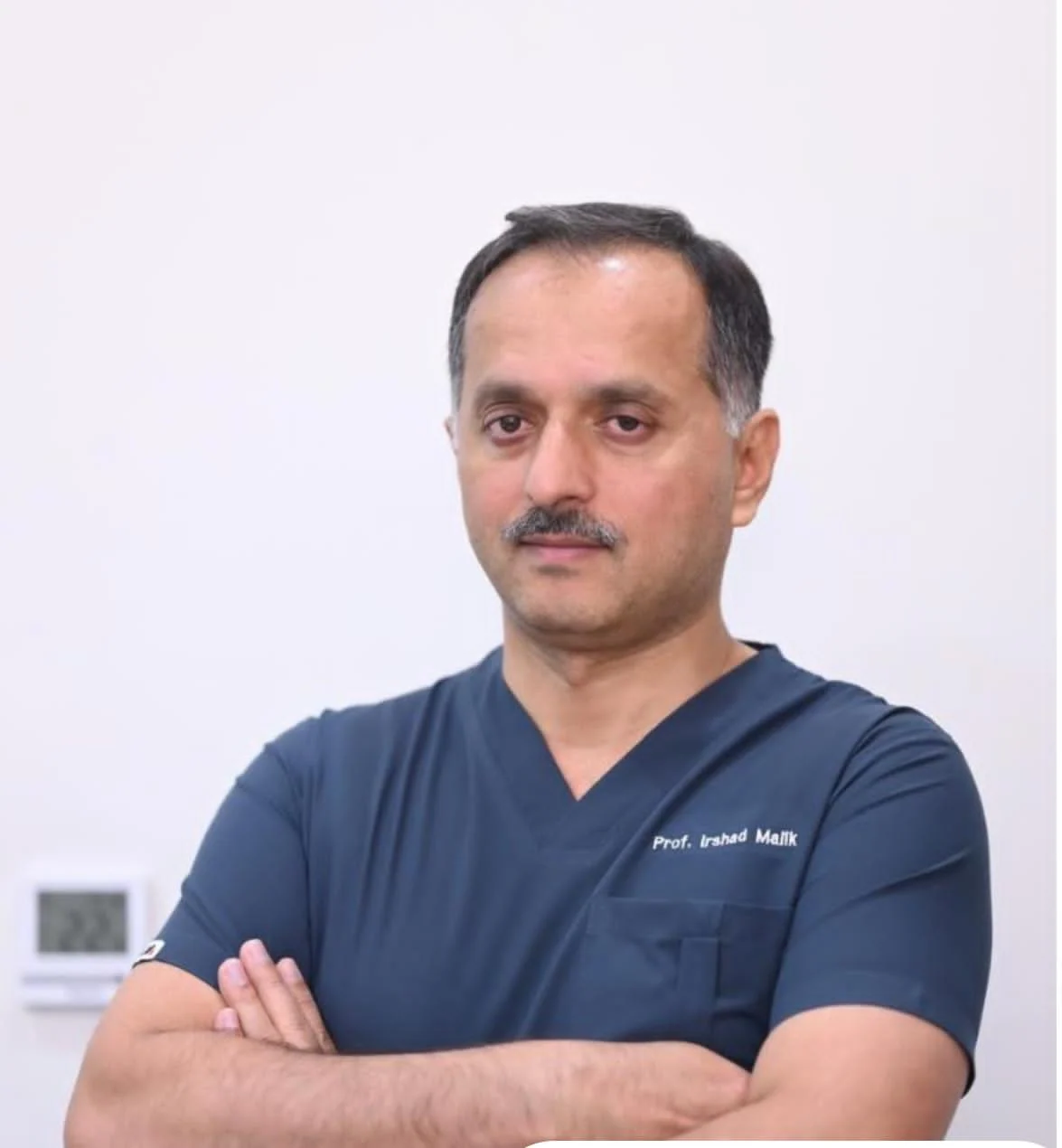
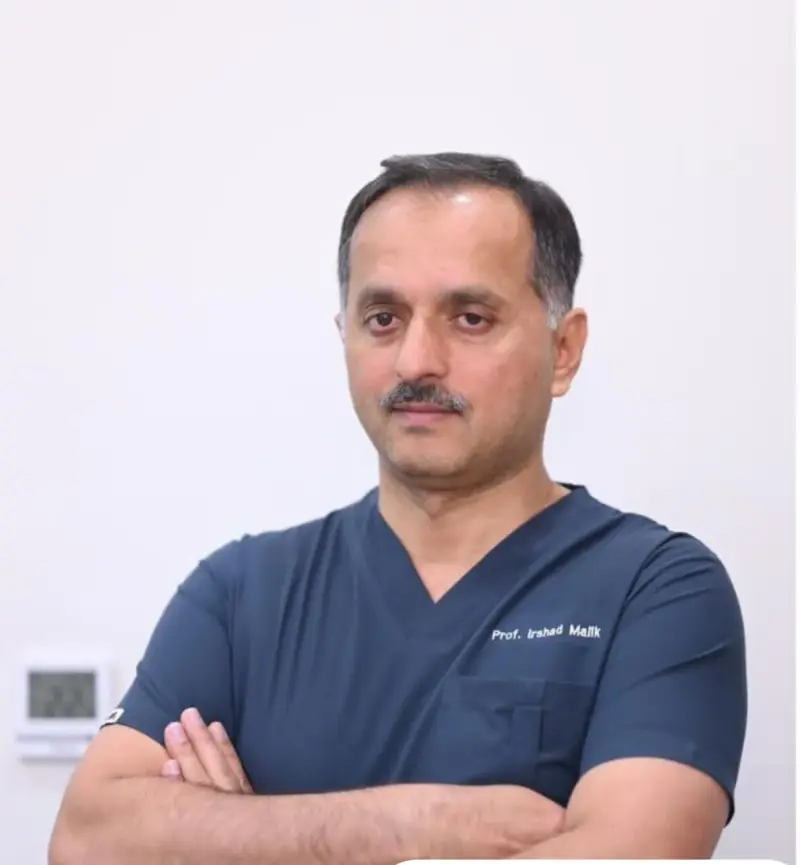
Prof. Dr. Muhammad Irshad Malik

Prof. Dr. Muhammad Irshad Malik holds an MBBS, MCPS, and FCPS in Otorhinolaryngology and Head and Neck Surgery. He is Professor and Head of Department, ENT Surgery, at Allama Iqbal Medical College and Jinnah Hospital Lahore, where he has practised for over 20 years. He sees patients for neck lumps, thyroid conditions, salivary gland tumours, laryngeal cancer, and other head and neck surgical problems — including voice-box disease overlapping with hoarse voice assessment — at ENT 360 Care Clinic in Valencia Town and Omer Hospital in Johar Town and on Jail Road, Lahore. Broader ear, nose, and throat care is part of the same ENT practice.

Prof. Dr. Muhammad Irshad Malik — Head and Neck Surgeon, Lahore
Professor & HOD, ENT Surgery AIMC / Jinnah Hospital
  • FCPS Certified Head and Neck Surgeon
  • Professor and HOD, AIMC / Jinnah Hospital
  • 20+ Years Surgical Experience
  • National FCPS and MCPS Examiner, CPSP
Quick Answers

Head and Neck Surgery — Common Questions

Who treats a neck lump in Lahore?

An ENT surgeon with head and neck training assesses neck lumps. Causes range from lymph nodes and thyroid nodules to salivary gland tumours and congenital cysts. Clinical examination, and imaging or fine-needle aspiration when indicated, guide the next steps. Persistent voice change lasting more than two weeks should also be examined promptly.

Is a head and neck surgeon the same as an ENT doctor?

Head and neck surgery sits within ENT (otolaryngology). An ENT surgeon with this focus manages thyroid disease, salivary gland tumours, neck masses, and cancers of the mouth, throat, and voice box, in addition to broader ear, nose, and throat care.

When should a thyroid problem be seen by an ENT surgeon?

Thyroid nodules, goitre causing compressive symptoms (difficulty swallowing or breathing), and thyroid cancers that may need surgery are assessed by an ENT / head and neck surgeon. Medical thyroid disorders without a surgical question may start with an endocrinologist.

Where can I see Prof. Dr. Irshad Malik for head and neck care?

He consults at ENT 360 Care Clinic in Valencia Town and at Omer Hospital in Johar Town and on Jail Road. Call 0303-0354233 or book via WhatsApp.

Scope of Care

What Does a Head and Neck Surgeon Do?

A head and neck surgeon finds and treats problems in the thyroid, salivary glands, lymph nodes, voice box and throat, and neck. Some of these problems are not cancerous. Others are. Either way, this doctor does the surgery. He does not just give advice.

This is different from a general ENT doctor. An ENT doctor treats common ear, nose, and throat problems. A head and neck surgeon handles cases that need specialist surgery in the head and neck area — see Prof. Dr. Muhammad Irshad Malik’s surgical background.

General ENT

Treats common ear, nose, and throat problems in everyday clinic practice.

Head & Neck Surgeon

Handles cases that need specialist surgery in the thyroid, salivary glands, neck, throat, and voice box — and performs the operation.

  1. Diagnosis

    Prof. Dr. Irshad Malik starts with a full examination of the neck, mouth, and throat. If there is a concern about the voice box or throat, he uses a nasolaryngoscope. This is a thin, flexible camera that goes through the nose and shows the voice box and throat on a screen. It takes a few minutes. No operation is needed for this. Based on what he sees, he decides whether scans, a tissue test, or other checks are needed next.

  2. Surgical Planning

    Every operation is planned for that specific patient. Prof. Dr. Irshad Malik looks at the scans, decides the safest way to operate, and coordinates with the anaesthetist. He explains what will happen before, during, and after surgery. Nothing is confirmed until the patient understands the full plan.

  3. Removal of Neck Lumps and Tumours

    This includes removing benign neck lumps such as thyroglossal cysts and branchial cysts. Thyroglossal cysts grow in the middle of the neck near the thyroid. Branchial cysts appear on the side of the neck. He also performs neck dissection, which is the removal of lymph nodes in the neck that contain cancer. Complex neck cases from across Punjab are referred to AIMC / Jinnah Hospital and Omer Hospital for this surgery.

  4. Thyroid Surgery

    The thyroid is a gland at the front of the neck that controls many body functions. When it develops nodules, a large swelling called a goitre, or cancer, surgery is often needed. Prof. Dr. Irshad Malik removes part or all of the thyroid at AIMC / Jinnah Hospital and Omer Hospital, where full anaesthesia and lab testing are available. How much is removed depends on the scan results and biopsy findings.

  5. Salivary Gland Surgery

    The parotid gland is a saliva-producing gland in the cheek. It sits directly over the facial nerve, the nerve that controls movement on that side of the face. Removing a parotid tumour without damaging this nerve requires a surgeon who knows exactly where the nerve runs during the operation. Prof. Dr. Irshad Malik performs this surgery at AIMC / Jinnah Hospital and Omer Hospital, Lahore.

  6. Throat and Voice Box Surgery

    The voice box, also called the larynx, sits at the top of the airway and produces sound when you speak. Cancer of the voice box may need part or all of it to be removed. Growths on the vocal cords are treated using a camera and microscope under general anaesthesia, with no cut on the neck. When the voice box is fully removed, the patient is prepared for voice rehabilitation before surgery. This means learning to speak again using a small device or a surgical valve.

  7. Follow-Up After Surgery

    After surgery, Prof. Dr. Irshad Malik checks the lab results from the removed tissue to confirm the diagnosis. He arranges a camera check of the throat where needed. Cancer patients follow a set schedule of check-ups with clear review dates. If input from cancer medicine specialists or radiologists is needed at any stage, this is arranged through AIMC / Jinnah Hospital and Omer Hospital, Lahore.

Oncology Focus

Head and Neck Tumours and Cancer

Head and neck tumours can be benign (non-cancerous) or malignant (cancerous). They can grow in the mouth, throat, voice box, salivary glands, thyroid, or neck lymph nodes. A head and neck surgeon checks what the tumour is and how far it has spread, then decides the right course of action. A lump does not automatically mean cancer.

What Are Head and Neck Tumours?

A head and neck tumour is an abnormal growth in this part of the body. Benign tumours grow slowly and do not spread. Malignant tumours can grow and spread to other areas. Assessment by a head and neck surgeon is the only way to know what a lump or lesion actually is.

Which Areas Can Be Affected?

  • Mouth and Oral Cavity

    In Pakistan, mouth lesions are strongly linked to tobacco, paan, and betel nut use. A sore that does not heal within three weeks, a white or red patch, or a lump inside the mouth should be checked. Early cancers here can be removed with surgery. Advanced cases need surgery combined with cancer treatment.

  • Throat

    The throat has three sections: behind the nose, behind the mouth, and the lower part that connects to the food pipe. Cancers here often show up as a neck lump, a sore throat that does not go away, or trouble swallowing.

  • Voice Box

    The voice box lets you speak. Cancer here often shows up as a voice change lasting more than two weeks. Early cases can be treated with keyhole surgery or radiotherapy. Advanced cases may need the voice box removed. Prof. Dr. Muhammad Irshad Malik performs voice box surgery at AIMC / Jinnah Hospital and Omer Hospital, Lahore.

  • Salivary Glands

    The parotid gland in the cheek, the submandibular gland under the jaw, and the sublingual gland under the tongue can all develop tumours. Most parotid tumours are benign. A lump in the cheek or under the jaw that has been there for several weeks needs specialist assessment.

  • Thyroid

    The thyroid gland sits at the front of the neck. Thyroid cancer usually appears as a painless lump there. Some patients also notice a voice change or difficulty swallowing. The main treatment is surgery to remove part or all of the thyroid, sometimes with nearby lymph nodes.

  • Neck Lymph Nodes

    Lymph nodes are small glands in the neck that help fight infection. A neck node that is firm, painless, and growing without a clear cause needs specialist assessment. Sometimes it is the first sign of a cancer that started elsewhere. The first test is usually a fine-needle aspiration, where a thin needle draws out cells for examination under a microscope.

Clinical Pathway

Head and Neck Cancer: Diagnosis and Treatment

When a head and neck tumour is suspected, the treatment path depends on the exact diagnosis, the location, how far it has spread, and the patient’s overall health. A head and neck surgeon leads the assessment and surgical decision-making.

  1. Evaluation

    Prof. Dr. Irshad Malik takes a full history, examines the neck and mouth, and uses a thin flexible camera through the nose to look at the voice box and throat directly. This is done in clinic at ENT 360 Care Clinic, Valencia Town, and takes a few minutes without general anaesthesia. The findings guide which tests are needed next.

  2. Imaging

    Neck ultrasound checks thyroid lumps and lymph nodes. CT scan shows the tumour’s size and position and is used for surgical planning. MRI gives more detail about soft tissue in the throat and deep neck. PET-CT checks whether cancer has spread beyond the neck in advanced cases. Scans support the examination. Surgery is never decided on scans alone.

  3. Tissue Testing

    A tissue sample confirms the exact diagnosis before treatment starts. A fine-needle test draws out cells from a lump using a thin needle. A core biopsy takes a slightly larger sample when the fine-needle result is unclear. Some lesions need a small biopsy in clinic or under general anaesthesia. The result directly determines which treatment is right.

  4. Surgical Treatment

    Keyhole surgery through a camera is used for early throat or voice box tumours. Neck dissection removes cancerous lymph nodes. Thyroid surgery removes part or all of the gland. Voice box removal is done for advanced cancer, with voice rehabilitation planned before the operation. Parotid surgery removes the gland while protecting the facial nerve. These procedures are performed at AIMC / Jinnah Hospital and Omer Hospital, Lahore.

  5. When More Than Surgery Is Needed

    Some cases need more than surgery. A cancer medicine specialist advises on chemotherapy or targeted drugs. A radiotherapy specialist plans radiation treatment. A pathologist confirms the tissue diagnosis. A radiologist reads scans throughout the process. At AIMC / Jinnah Hospital and Omer Hospital, Lahore, Prof. Dr. Irshad Malik coordinates this input and explains to each patient which specialists are involved and why.

    • Cancer medicine
    • Radiotherapy
    • Pathology
    • Radiology
Clinical Focus

Head and Neck Conditions Treated in Lahore

The list below covers common reasons patients seek head and neck surgical assessment. It is not exhaustive; each case needs individual clinical evaluation.

Neck lump

A new or persistent swelling in the neck should be assessed rather than ignored. Causes include reactive lymph nodes, thyroid nodules, salivary gland masses, branchial cleft cysts, and, less often, malignancy.

Assessment typically includes history, neck examination, and — when indicated — ultrasound, fine-needle aspiration (FNA), or further imaging before any surgery is planned.

Thyroid nodules & goitre

Enlarged thyroid (goitre) or nodules may cause difficulty swallowing, breathing discomfort, voice change, or cosmetic concern. Some nodules require evaluation to exclude cancer.

Thyroidectomy is considered when compressive symptoms, confirmed malignancy, or other surgical criteria are met after appropriate investigation.

Salivary gland tumours

Masses in front of the ear (parotid) or below the jaw (submandibular) may represent benign tumours such as pleomorphic adenoma, or less commonly malignancy.

If left untreated, benign tumours can continue to grow and cause pain, with a low risk of malignant transformation. Surgical excision is planned after clinical assessment and imaging when needed.

Head & neck oncology

Cancers of the oral cavity, throat, and larynx need timely specialist assessment. Risk factors for oral cavity tumours include smoking and alcohol. Carcinoma of the tongue is among the more common oral cancers.

Surgical options may include resection with neck dissection, or laryngectomy for advanced laryngeal disease, coordinated with oncology teams when radiotherapy or chemotherapy is also indicated.

Surgical Care

Head and Neck Procedures

Procedures are recommended only when clinical findings support them and non-surgical options have been considered. Risks, benefits, and alternatives are discussed before any decision.

Thyroidectomy

Surgical removal of part or all of the thyroid gland. This may include thyroidectomy for cancer, and total thyroidectomy for multi-nodular goitre causing compressive symptoms such as dysphagia or dyspnea (گوئٹر).

Salivary gland surgery

Specialised removal of benign or malignant tumours from the parotid and submandibular glands, including excision of the submandibular gland for pleomorphic adenoma presenting as a mass below the jaw (جبڑے کے نیچے گومڑا).

Hemiglossectomy & neck dissection

Surgical treatment for carcinoma of the tongue (زبان کا کینسر) and related oral cavity tumours, which may include partial tongue resection and neck lymph node dissection when indicated.

Total laryngectomy

Complete removal of the larynx (voice box) for selected advanced laryngeal cancers, with careful counselling about voice rehabilitation and multidisciplinary follow-up.

View related case studies →

Guidance

When Should a Neck Lump Be Seen by a Surgeon?

A neck lump that has been there for more than two weeks, feels firm, and is not shrinking should be assessed by a head and neck surgeon. Most neck lumps are not cancerous. But some are the first sign of a thyroid problem, a salivary gland tumour, or a cancer that spread from the throat, voice box, or mouth to a lymph node in the neck. UK referral guidance on persistent neck lumps is summarised in NICE guideline NG12 — Suspected cancer: recognition and referral.

Features That Need Prompt Assessment

See a head and neck surgeon if the lump:

  • Has been there for more than two weeks with no sign of infection
  • Feels hard and does not move under the skin
  • Is painless but keeps growing
  • Comes with a voice change lasting more than two weeks
  • Makes swallowing difficult or uncomfortable
  • Appears alongside unexplained weight loss or tiredness
  • Is on the same side as blood in saliva or nasal discharge
  • Comes with ear pain that has no clear ear cause

These features do not confirm cancer. The assessment simply finds the actual cause. If treatment is needed, starting earlier means more options are available. That is the practical reason not to wait.

For a full guide to neck lumps and what to expect at your appointment, see the neck lump section below.

Finding the Right Specialist

Who Should See a Head and Neck Surgeon?

A head and neck surgeon should be seen by anyone with a persistent neck lump, a thyroid or salivary gland problem, a throat or voice box condition needing surgical assessment, or a head and neck cancer diagnosis. This specialty exists for cases that go beyond routine ENT care.

Should I See an ENT Doctor or a Head and Neck Surgeon?

An ENT doctor handles common ear, nose, and throat problems. A head and neck surgeon focuses on surgical cases involving the thyroid, salivary glands, lymph nodes, voice box, and throat. The two are not in conflict. Many patients start with an ENT assessment. If the problem needs specialist surgery, a head and neck surgeon takes over. Prof. Dr. Muhammad Irshad Malik holds both roles, so assessment and surgery happen without a separate referral.

Can an ENT Doctor Assess a Neck Lump?

Yes. An ENT specialist is often the first to examine a neck lump. If the cause is straightforward, such as a swollen lymph node after a throat infection, it can be managed without surgery. If the results point to a tumour or cancer, a head and neck surgeon steps in. Because Prof. Dr. Irshad Malik covers both roles, the patient does not need to restart with a new doctor.

Who Treats Thyroid and Neck Problems in Lahore?

Day-to-day thyroid management, including medication and monitoring, is handled by a hormone specialist called an endocrinologist. When surgery is needed, a head and neck surgeon performs it. At AIMC / Jinnah Hospital Lahore, thyroid surgery is done within the ENT and Head and Neck Surgery Department, where Prof. Dr. Muhammad Irshad Malik is Head of Department.

Who Treats Throat Tumours?

Throat and voice box tumours are assessed and operated on by a head and neck surgeon. Small early tumours may be removed through a camera with no cut on the neck. Advanced voice box cancer may need the voice box removed, with voice rehabilitation planned before surgery. Cancer medicine and radiotherapy specialists join the team where needed.

Who Should I See for Persistent Hoarseness in Lahore?

A voice change lasting more than two weeks needs a direct camera examination of the voice box. This is done in clinic. If a growth is found, a head and neck surgeon assesses it and plans treatment. A hoarse voice dismissed as a cold or acid problem without a camera check has not been properly assessed. See the Hoarse Voice Lahore guide on the Throat Specialist page.

Who Treats Salivary Gland Problems?

Parotid tumours, stones in the jaw gland (submandibular gland), and recurring gland infections are managed by a head and neck surgeon. Removing the parotid gland requires careful protection of the facial nerve, which controls movement on that side of the face. Prof. Dr. Irshad Malik performs this surgery at AIMC / Jinnah Hospital and Omer Hospital, Lahore.

Who Treats Head and Neck Cancer in Lahore?

The surgical part of head and neck cancer treatment is led by a head and neck surgeon. This includes removing the tumour and cancerous lymph nodes. Cancer medicine and radiotherapy specialists are brought in when needed. Prof. Dr. Irshad Malik coordinates the full process at AIMC / Jinnah Hospital and Omer Hospital, Lahore, and explains to each patient which specialists are involved and why.

Your Surgeon

Why Choose Prof. Dr. Muhammad Irshad Malik?

Prof. Dr. Muhammad Irshad Malik is Professor and Head of Department, ENT Surgery, at Allama Iqbal Medical College and Jinnah Hospital, Lahore. He holds an MBBS, MCPS, and FCPS in Otorhinolaryngology and Head and Neck Surgery, with over 20 years of surgical experience at a major teaching hospital in Punjab.

Qualifications

  • MBBS, Nishtar Medical University, Multan
  • MCPS (ENT), College of Physicians and Surgeons Pakistan
  • FCPS (Otorhinolaryngology and Head and Neck Surgery), CPSP

Clinical Experience

Over 20 years of surgical practice at Nishtar Hospital, Fatima Jinnah Medical University, Sir Ganga Ram Hospital, and AIMC / Jinnah Hospital Lahore. He performs thyroid surgery, parotid surgery, neck dissection, voice box removal, and complex cancer surgery as Head of the ENT and Head and Neck Surgery Department at Jinnah Hospital.

Academic Expertise

FCPS Supervisor, MCPS Supervisor, and MS (ENT) Supervisor at CPSP. FCPS and MCPS Examiner at CPSP. Chairman, PSORL Congress 2024.

Research and Publications

Author and co-author of research in ENT and head and neck surgery. Presented at national and international conferences. Full publication list available on request.

Professional Affiliations

  • Professor and HOD, ENT Surgery, AIMC / Jinnah Hospital Lahore
  • FCPS and MCPS Examiner, CPSP
  • Founder, Cochlear Implant Programme, Jinnah Hospital Lahore
  • Chairman, PSORL Congress 2024
  • Member, PSORL, Society of Rhinology Pakistan, Society of Otology Pakistan

For the full biography and career timeline, see the About page.

Roles Explained

Head and Neck Surgeon, ENT Specialist, and Oncologist: What Is the Difference?

Several different specialists may be involved when someone has a head or neck problem. Understanding who does what helps patients know who to see first and what to expect from each person.

Specialist Main Role When to See Them
ENT Specialist Ear, nose, and throat conditions, both medical and surgical Ear infections, sinusitis, tonsil problems, hearing loss, general ENT
Head and Neck Surgeon Surgical assessment and treatment of neck lumps, thyroid, salivary glands, voice box, and head and neck cancer Neck lump, thyroid surgery, salivary gland tumour, laryngeal cancer
Medical Oncologist Drug-based cancer treatment including chemotherapy and targeted therapy When cancer needs systemic treatment alongside or after surgery
Radiation Oncologist Radiotherapy planning and delivery When radiation is part of the treatment plan
Radiologist Reading and reporting scans Scans are ordered by the surgeon and interpreted by radiology
Pathologist Examining tissue and cells from biopsies and surgery Confirms the exact diagnosis after any tissue sample is taken

In complex head and neck cancer cases, several of these specialists work on the same patient. The head and neck surgeon typically leads the surgical assessment and coordinates input from the wider team based on what each case requires.

Your Visit

What to Expect at Your Consultation with Prof. Dr. Irshad Malik

Most patients feel unsure about what happens at a specialist appointment. Here is exactly what to expect when you see Prof. Dr. Irshad Malik.

  1. Your History and Symptoms

    Prof. Dr. Irshad Malik starts by asking about your symptoms. When did they start? Have they changed? Is there any voice change, difficulty swallowing, or unexplained weight loss? He also reviews any previous test results or referral letters you bring. The more information you bring, the more focused the consultation can be.

  2. Examination

    He examines your neck, mouth, and throat. If there is a concern about the voice box or throat, he uses a nasolaryngoscope. This is a thin, flexible camera that goes through the nose and gives a direct view of the voice box and throat on a screen. It takes a few minutes and does not need an operation or general anaesthesia. Findings are explained at the time.

  3. Tests and Scans

    Based on what the examination shows, he arranges the appropriate next steps. These may include a neck ultrasound, a CT scan, an MRI, thyroid blood tests, or a fine-needle test (where a thin needle draws out cells from a lump for examination). Not every patient needs every test. The tests ordered depend on what was found during the examination.

  4. Diagnosis and Treatment Plan

    Once results are available, Prof. Dr. Irshad Malik explains the findings in clear terms. He goes through all treatment options, including non-surgical ones, and gives a specific recommendation based on your case. Nothing is confirmed until you understand the plan and are comfortable with it.

  5. If Surgery Is Needed

    Where surgery is required, it is arranged at AIMC / Jinnah Hospital or Omer Hospital, Lahore. Both have full theatre and anaesthesia facilities. Before anything is booked, he explains what the operation involves, what recovery looks like, and what the costs will be. You leave the consultation knowing exactly what the next step is.

Book Now

Book Your Head and Neck Consultation in Lahore

Prof. Dr. Muhammad Irshad Malik sees patients at three locations in Lahore. You can book by WhatsApp or phone call at any of the clinics below.

Primary Clinic

🏥 ENT 360 Care Clinic

58-J Valencia Town, Lahore
Mon–Sat: 4:00 PM – 6:00 PM
Evening Clinic

🏥 Omer Hospital (Johar Town)

14-C2, Block C 2 Phase 1 Johar Town, Lahore
Mon–Sat: 7:00 PM – 8:00 PM
Evening Clinic

🏥 Omer Hospital (Jail Road)

5-Jail Road, Shadman II, Lahore
Mon–Sat: 8:30 PM – 10:00 PM
FAQ

Frequently Asked Questions: Head and Neck Surgery Lahore

What is the difference between neck dissection and thyroidectomy?

Thyroidectomy is surgery to remove all or part of the thyroid gland, which sits at the front of the neck. Neck dissection is a separate operation that removes lymph nodes in the neck that contain or may contain cancer. In some cases, both are done in the same operation when thyroid cancer has spread to nearby lymph nodes.

Does an ENT surgeon perform thyroid surgery?

Yes. An ENT surgeon with head and neck surgical training performs thyroidectomy for thyroid nodules, goitre, and thyroid cancer. At AIMC / Jinnah Hospital Lahore, thyroid surgery is carried out within the ENT and Head and Neck Surgery Department, where Prof. Dr. Muhammad Irshad Malik is Head of Department.

Where does the consultation take place, and where is surgery performed?

Consultations are held at ENT 360 Care Clinic in Valencia Town and at Omer Hospital in Johar Town and on Jail Road, Lahore. Where surgery is needed, it is arranged at AIMC / Jinnah Hospital or Omer Hospital, both of which have full theatre and anaesthesia facilities. The two settings are separate. You do not need to go to the hospital for a routine consultation.

Can I start with a general ENT doctor if I am not sure which specialist I need?

Yes. Many patients see an ENT doctor first. If the problem turns out to need specialist head and neck surgical assessment, such as a growing neck lump, a thyroid condition, or a suspected tumour, the patient is referred on. Because Prof. Dr. Irshad Malik is both an ENT specialist and a head and neck surgeon, this transition can happen without starting again with a new doctor.

Why can the exact cost of surgery not be given without an assessment?

The cost depends on the exact procedure, how complex the case is, which hospital is used, and how long the stay is. None of these can be confirmed before the examination and investigation results are reviewed. Costs are always discussed in full before any surgery is agreed.

Who performs head and neck surgery at Jinnah Hospital Lahore?

Prof. Dr. Muhammad Irshad Malik (MBBS, MCPS, FCPS) is the Professor and Head of Department, ENT Surgery, at AIMC / Jinnah Hospital Lahore. He performs thyroid surgery, neck dissection, voice box surgery, parotid surgery, and other head and neck procedures within the ENT and Head and Neck Surgery Department.